


Beyond Borders: The Schengen Agreement of 1985 and Its Revolutionary Impact on the European Project
Article
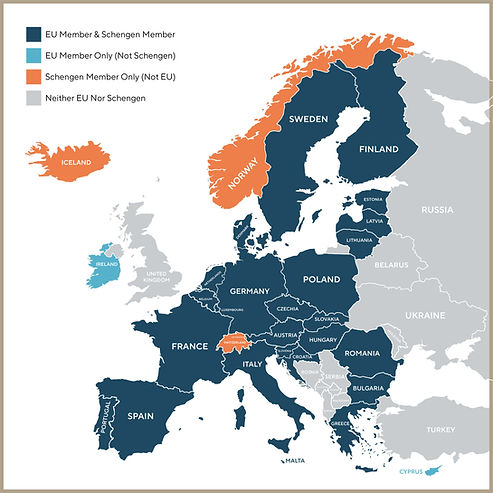
June 14th, 1985, marks a watershed moment in modern European history. On this day, aboard the passenger ship Princesse Marie-Astrid on the Moselle River near the tiny Luxembourgish village of Schengen, a historic accord was signed. Initially involving only five nations—France, West Germany, Belgium, the Netherlands, and Luxembourg—the Schengen Agreement set in motion an unprecedented political, economic, and social experiment. What began as a modest initiative to eliminate border checks evolved into one of the most significant pillars of the European Union (EU), fundamentally reshaping the continent’s economic landscape, daily life, and overarching identity.
Economic Dynamics and Commercial Catalysts
At its core, the Schengen Agreement served as the primary catalyst that transformed the European Single Market from a theoretical concept into a tangible reality. Prior to 1985, internal national borders acted as severe economic bottlenecks. Commercial transport vehicles faced gruelling, unpredictable delays at checkpoints, which artificially inflated transit times and administrative logistics expenses. By dismantling these physical barriers, Schengen facilitated the seamless flow of goods, services, capital, and labour—the celebrated "four freedoms" that define the European integration project.
This borderless architecture enabled modern, highly integrated cross-border supply chains, such as "just-in-time" manufacturing, to flourish. A manufacturing plant in Germany could now rely seamlessly on components shipped from Italy, Spain, or Poland without encountering a single customs delay. This friction-free commerce vastly enhanced the global competitiveness of European industries, stimulated sustained economic growth, and attracted substantial foreign direct investment by creating a truly unified economic space of hundreds of millions of consumers.
Daily Life and Unprecedented Conveniences
Beyond macroeconomic indicators, the true triumph of the Schengen Area lies in its profound impact on the everyday lives of ordinary citizens. Today, the Schengen Zone encompasses over 400 million people across more than two dozen European countries, functioning essentially as a single jurisdiction for international travel. For millions of Europeans residing in border regions, the concept of a national frontier has faded into a historical abstraction. Commuters’ cross-national lines daily for employment, education, or medical services with the exact same ease as moving between municipal neighbourhoods.
Furthermore, the tourism and hospitality sectors witnessed an unprecedented boom. A traveller can journey from the Baltic states to the Mediterranean coast without ever encountering a passport control post or a visa queue. This unprecedented freedom of movement has also deeply enriched educational and cultural exchanges. It has breathed life into initiatives like the Erasmus+ student exchange program, making cross-border relocation effortless, natural, and highly attractive for the younger generations, who now view the entire continent as their playground for growth.
Catalysing the European Ideal and Collective Identity
Critically, the Schengen Agreement provided the psychological architecture necessary to build a genuine, post-national European identity. For centuries, Europe was defined by fractured rivalries, heavily fortified borders, and devastating conflicts that culminated in two World Wars. The deliberate, sovereign decision by nation-states to dismantle their border posts represented a profound leap of faith and an extraordinary testament to mutual trust and reconciliation.
For the average citizen, the European Union can often feel like a distant, technocratic apparatus managed by institutions in Brussels. Schengen transformed this abstract political entity into a deeply personal, lived reality. By erasing physical divides, it fostered an environment where diverse cultures, languages, and histories could intermingle daily. This continuous cross-pollination has been instrumental in cultivating a sense of "Shared European Citizenship." It has bridged the psychological gaps between distinct nationalities far more effectively than any top-down political rhetoric, establishing peace not just on paper, but in the hearts of the people.
Contemporary Challenges and Resilience
While the Schengen framework has faced considerable stress tests in recent decades—ranging from irregular migration crises to emergency border closures during the COVID-19 pandemic—these challenges have ultimately underscored its absolute indispensability. Whenever temporary checks were reinstated in times of crisis, the immediate consequence was widespread logistical chaos, economic slowdowns, and public frustration. These instances served as a stark reminder of the immense burdens that a return to fragmented borders would inflict. Thus, Schengen remains a dynamic agreement, continuously fortified by enhanced external border management (Frontex) and advanced police cooperation (such as the Schengen Information System) to safeguard internal liberties.
In conclusion, the signing of the Schengen Agreement on June 14th, 1985, was not merely an administrative pact; it was the birth of a borderless vision that fundamentally redefined what it means to be European. By driving economic dynamism, introducing unparalleled daily conveniences, and weaving a complex tapestry of shared cultural identity, Schengen has become the very heartbeat of European integration. As a beacon of peace and cross-border solidarity, this monumental agreement continues to demonstrate how a continent once deeply divided by iron curtains could unite under a single banner of collective freedom and human dignity.